Introduction: “The Visica Compass — An invitation to Inquiry — Navigating Why Light and Darkness Matter in a Time of Massive Transformation.”
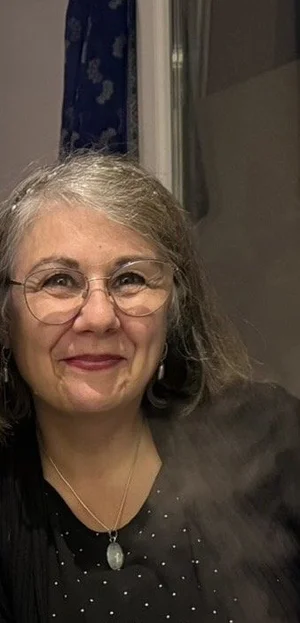
© By Barbara Keller | Visica Co-Creation
This article draws from “The Visica Compass – Navigating Why Light and Darkness Matter in a Time of Massive Transformation” – a framework integrating inner work, systemic insight, and symbolic intelligence.
Dedication
This article series is dedicated to my children — Eline and Claire, and the three souls — Suraya, Martin and Robert — who touched this world only briefly and left a deep imprint of remembrance. You inspire me to embrace and balance both darkness and light — and to cherish their co-creating force for the generations to come.
“Perhaps before every new beginning there is a darkness that quietly holds what has not yet come into being — that silent field before the first light, where silence and sound were held in one breath.”
Before any word was spoken, before even light took form, there was a field that could hold both silence and sound — a womb of Love: the capacity to hold without dividing. From that holding, both the seen and unseen were born: cosmos, the outer unfolding of matter, and Kosmos, the inner unfolding of meaning and consciousness.
Between them lies the space of creation itself — a space that cannot be entered through judgment, for judgment divides what Love seeks to join. To walk this path is to learn how to see again with both eyes open: one turned toward the world, one toward the mystery.
Yet how easily judgment slips back in — the subtle wish to decide what belongs to light and what to dark. Every path of transformation begins with this remembering: that creation unfolds not through verdict, but through presence.
To “walk with both eyes open” was first spoken to me by my father. I did not understand what he meant at the time. Years later, when I read Krishnamurti describing the same invitation, I recognized it again — and since then, this teaching has returned to me in many forms. Yet it remains one of the greatest challenges of all: to keep the inner eye open in a world that constantly distracts and seduces it closed.
Modern life trains us to look outward, not inward. Screens and schedules keep the outer eye busy, while the inner eye — the one turned toward mystery — falls asleep. In a society that prizes speed and certainty, the capacity to see with both eyes at once becomes an act of quiet rebellion. Still, this is the call of the Compass: to stay awake within the womb of Love, where Kosmos and cosmos meet, and where true seeing begins.
The following experience offered me an insight that continues to guide me: every illumination is born from relationship:
When looking at snow on a winter’s day, it reflects sunlight in all its splendour and beauty. Light — so transparent and seemingly pure — holds within it a treasure of hidden colours like rainbows, only revealed when something bends it into view or when darkness provides the contrast necessary for light to be seen.
What might this dance of light and shadow teach us about living through profound change and transformation?
Each meeting of light and darkness is a conversation between worlds — between the outer cosmos of matter and the inner Kosmos of meaning. Their dialogue reminds us that perception itself is relational: what we call illumination is never solitary, but born through contact within the relationships between worlds, as something not yet fully seen gradually comes into view. When we remember this, even language begins to bend like light, revealing the hidden colours within the words we use.
What if the way we speak of light and darkness also shapes what we are able to see?
Our languages, metaphors, and inherited stories often cast light as good and darkness as bad or even dangerous — influencing our thoughts, emotions, and cultural responses before we even realize it.
We often speak of the permanent nature of light and the transient nature of darkness. Yet if we look closely, both are, in their physical form, impermanent: photons scatter and fade, stars burn out, nights return. Still, symbolically, light has long been associated with what endures — truth, presence, awareness — while darkness has been seen as the cyclical veil, the regenerative pause, the turning of the season that eventually gives way again to light.
In this series, we will explore both, not as fixed opposites, but as shifting presences that together shape transformation. Beneath the dance of light and darkness lies a quieter invitation — to sense the fullness of life that our modern ways of seeing so often overlook.
Reflective Question
“Perhaps this is where transformation begins — in remembering that what is unseen still shapes what is.”
If both light and darkness are transient in form, yet each carries a deeper symbolic presence, how do we relate to them in our own lives — as fleeting experiences, or as guiding forces that endure beyond circumstance?
The following series of articles invites you not only to explore light and darkness across science, society, leadership and psychology — but also to notice how the words we use create the very reality we live in. To explore what we forget when everything is defined by speed, measurement and surface clarity, and what happens with the essence of who we are when we forget that meaning, spirit, and relationship also shape the world we inhabit. I invite you to listen to what has been forgotten, and to rediscover the hidden wholeness that continues to shine beneath the visible.
Light moves at 299,792 kilometers per second, yet some of our deepest truths seem to take years to reach us. What if both science (offering measurable truth) and alchemy (offering symbolic, transformative truth) are attempting to illuminate the same mystery — but in vastly different ways?
Why do stillness and motion, darkness and light always coexist? In nature, both are impermanent rhythms — night gives way to day and movement follows pause. In us, too, these rhythms play out: stillness can restore or resist, movement can create or dominate. When we forget that both are needed, the rhythm between them becomes distorted — showing up as ego structures, power hierarchies, or psychological defences.
Reflective Question
Where in your life have you been asked to shed light on a question, situation, or process?
And when have you found yourself sitting in the dark, waiting for something new to be born?
Continue the Inquiry
If you would like to share what these questions evoke in you, you are welcome to leave a reflection below in the comment field.
A Personal Note — Returning Through the Language of the Earth
This article series is more than a theoretical exploration through books and teachings. It is the fruit of a long and winding path — one that I’ve walked personally, professionally, and spiritually.
My journey began around the age of ten, when I asked my parents about the meaning of life. Both shared their love for beauty, music, culture and nature — weekly hikes, picking plants and fruit, sustaining health, and supporting the healing processes of our bodies.
Stargazing with my father on clear summer nights — marveling at the vastness of the universe and asking questions like “What holds planets in place the way they do?” — opened my imagination.
My father introduced me to the quiet practice of meditative observation, and around the age of sixteen, to the writings of Krishnamurti and several Zen Buddhist texts.
Listening to my mother share her knowledge of medicinal plants, while she arranged flowers according to the Japanese art of Ikebana, awakened my deeply felt connection with the Kosmos and with the living Earth beneath my feet.
My parents came from different cultures, and both were linguists. Through their vivid storytelling — and later, through sharing the use and meaning of words across languages — they awakened in me a deep passion and curiosity for unravelling how language reflects the cultures it belongs to, as well as a fascination for stories and myth.
Years later, I was introduced to the direct transmission of the indigenous world. During my travels, meeting with tribal communities, I was invited into a different way of seeing — one that doesn’t separate language from land, or healing from relationship.
Participating in vision quests, sweat lodges, sun dances, and pipe ceremonies, I was immersed in a way of knowing that listens first — to the wind, to silence, to the dreaming of the forest.
Their view of health and illness is not merely biological, but relational: illness is not a defect but a disruption in relationship — with the ancestors, with the unseen, with the land.
I observed how shamans worked with medicinal plants, symbols, and visions — not just to treat symptoms, but to restore connection. I witnessed a language that is not spoken, but received.
A language that remembers
These experiences changed me. They rewired and deepened my relationship with Mother Earth, reconnected me to the Kosmos, and brought me back to a deep inner remembering of who I am.
I carry immense gratitude for their wisdom — a wisdom that does not seek to dominate, but to belong.
And yet, I longed for a way to give language to these experiences — to bridge what I had seen and felt in ceremony with the clarity of inner work and the complexity of collective life.
That bridge began to form through the teachings of A.H. Almaas, whose inquiry process I’ve practiced for over three decades as one of his students. His work invited me to turn inward with radical honesty and presence — to stay in contact with the discomfort, and to trust that clarity often lies beneath the descent into the very feelings we avoid.
These hidden layers of fear, shame, or longing silently shape our lives when left unacknowledged. Almaas’ Inquiry opened a way to meet them, not with judgement, but with curiosity and by remaining in touch with the felt experience — revealing the light of awareness within the very places we tend to turn away from.
In parallel, Otto Scharmer’s Theory U offered a complementary descent — a way to hold space for transformation not only within, but also in systems and organizations. His model showed me that real change within the structures of our systems comes from the bottom of the U — the place of presencing (a place of presence and sensing) — where deep listening reveals what wants to emerge.
Over time, I began to see that these threads — the love for culture, music, nature and the Kosmos, the deep listening of indigenous ceremony, the visionary clarity of shamanic relational understanding and healing, the precision of Almaas’ inquiry, and the systemic depth of Theory U — were not separate.
They were facets of the same truth: that transformation requires a descent.
An entering of the relationship between letting go and letting come. A holding of the unknown without rushing to resolve it.
And so, the Visica Compass emerged — not as a theory, but as a lived synthesis. A framework that could hold the symbolic, the systemic, and the personal in one integrated field. A compass not for escaping challenge, but for moving through it — with presence, precision, and poetic intelligence.
The Compass does not offer answers by following a method. It offers a way of seeing, a way of listening — to ourselves, to each other, and to the world — so that action can emerge from deeper alignment, from attunement, rather than reactivity.
When we descend, we meet not just our personal wounds, but the archetypal patterns and systemic loops that shape our collective lives. By combining inquiry with Theory U, and with the wisdom from other perspectives like language, mythology, psychology, neuroscience, to name a few, we begin to ask reflective questions that open the path not only to insight — but to embodied, emergent response.
Closing Invitation
This article series is an invitation to light and darkness not as opposites to be mastered, but as living forces that co-create. To reclaim the language that helps us listen, restore, transform and co-create a way forward to ourselves, to each other, and to the living world — with symbolic, systemic, and soulful intelligence.
This process deepens our understanding of today’s great transformations, both personal and collective.
It is an invitation to enter a process akin to solve et coagula, as the alchemists once said — to dissolve and reform (the alchemical cycle of breaking down and recreating anew) — where essence is extracted from the shadows, and light emerges anew.
It is, in essence, a call to remember who we are — and to reshape how we see, speak, and lead in a time of deep transformation, affecting us all on the individual as well as on the collective and systemic plane.
We will return again and again to the same quiet threshold: the space where judgment softens into inquiry and discernment, where speed gives way to presence, and where meaning is not imposed, but sensed.
In a time that urges us to choose sides, this inquiry asks something more demanding — and more human: to learn how to see with both eyes open, and to remember what becomes possible when we do.
The Compass can be used as a personal development plan — helping you notice where you move with awareness and where shadows still steer your choices. It can guide group processes — supporting teams and organizations to face what is hidden and to co-create with greater clarity. And it can even serve as a lens for larger shifts, like the rising use of AI: reminding us that innovation always casts both light and shadow, and that wisdom arises when we hold both together.
This introduction is only the beginning — the first step in a mosaic of inquiries.
Perhaps beneath every inquiry in the pages ahead lies one quieter question?
Could anything truly exist without relationship?
Could a cell become itself without the body?
Could language exist without speaker and listener?
Could light be perceived without contrast?
Could we be fractals of a greater whole if no relationship held us together?
This series does not seek to answer these questions. It invites us to live them.
In the coming months, each article will open a new window into the many ways light and darkness shape inquiry in times of massive transformation — from language and myth, to science, psychology, and leadership.
Whether you're navigating change in your life, your work, or in the collective field — we will explore how ancient symbols and modern insights can illuminate the path through inquiry.
If something here stirs you and you would like to continue the journey with me, you are warmly invited to:
Receive new reflections and articles as they are released
Join dialogues, workshops, and gatherings around the Visica Compass
Explore how inner work, systemic insight, and symbolic intelligence can guide us in uncertain times

© With respect to the owner of this picture
“Dissolve what you are not. Coagulate what is essential.”
Next in the Article Series
Article 0: Prelude — The Sound of Presence — Before the Word, There Was Resonance
We begin before words and forms — in the field of vibration itself — the hum of existence.

© Barbara Keller | Visica Co-Creation